
Ep 26 - The Volunteers Who Are the Eyes and Ears of the Court
🌐 Website: https://www.bsharpe.net/
By Sherry Sutton | Heart of the Hustle Show · Recorded for North Texas Giving Day•McKinney, TX
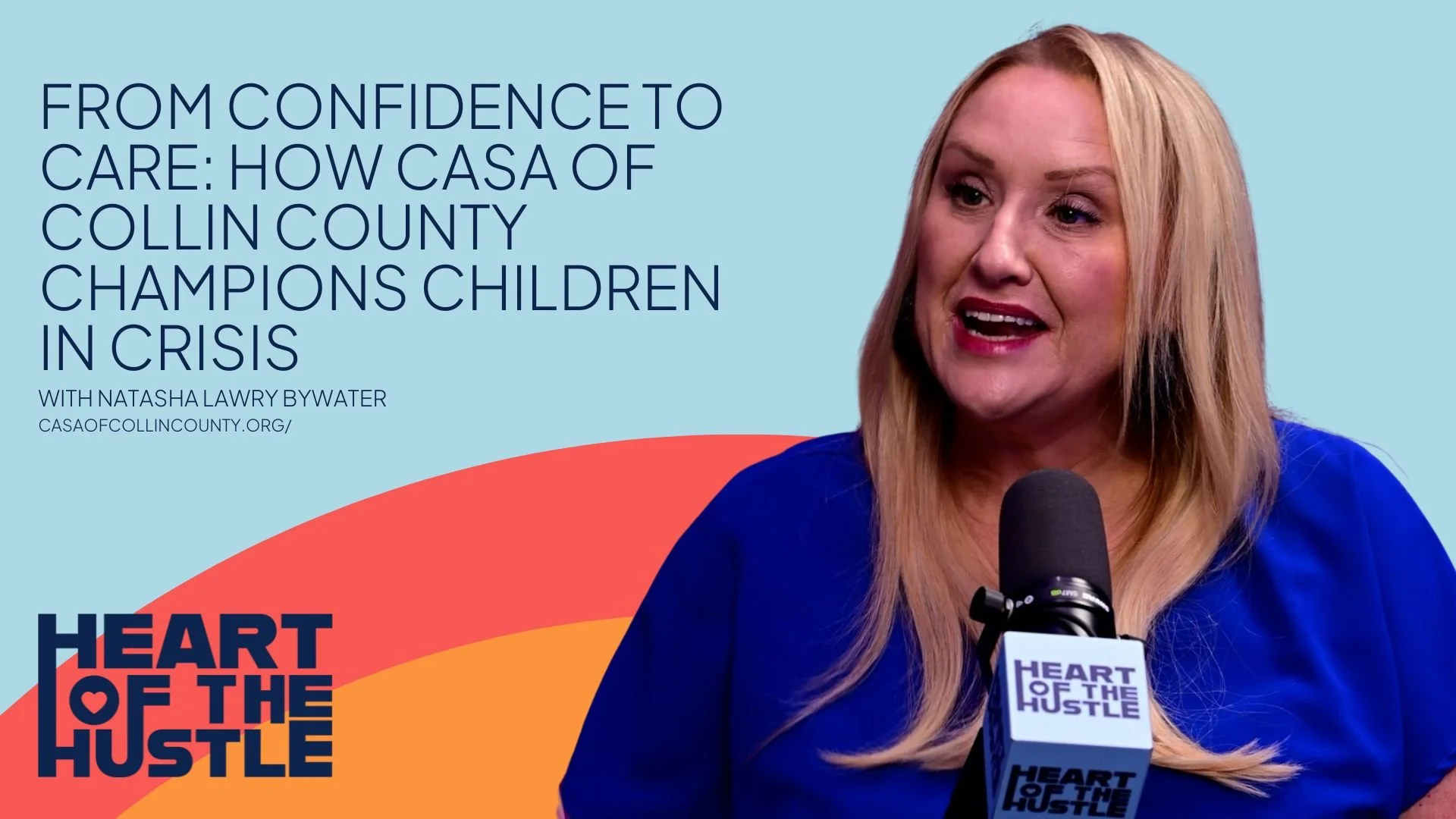
Inside CASA of Collin County with Natasha, and how one trained advocate can change the entire story for a child in foster care.
Ihave packed lunches for a good cause. I have shown up for the one-hour, feel-good kind of volunteer event, and those absolutely have their place. But this episode introduced me to a completely different kind of service, the kind a Collin County district attorney once called the Navy SEALs of the volunteer world. I sat down with Natasha Lawry Bywater from CASA of Collin County, and by the end I understood why the judges in our county lean on these everyday people to help decide what happens to a child's whole life.
If you have never heard of CASA, you are not alone, and that is exactly why I wanted to give this organization a full spotlight. The work is quiet, it is heavy, and it is some of the most important advocacy happening in North Texas right now.
“You will see live advocates up there changing the story for these children.”
What is CASA of Collin County?
CASA stands for Court Appointed Special Advocates. It is a nonprofit that speaks up for children in foster care, and it is volunteer based and volunteer driven all the way through. There is a staff of 19 here in Collin County working out of a sweet little office in downtown McKinney, the one with the child-friendly murals on the outside that everyone stops to take pictures next to. But the heartbeat of the organization is its trained volunteers.
Here is the part that surprised me most. Six judges in Collin County hear child protection cases, and every one of them refers to CASA as the eyes and ears of their court. That is not a marketing line the organization came up with for itself. That is what the judges call them, because a CASA advocate often knows more about a child's day-to-day life than anyone else standing in that courtroom.
What a CASA volunteer actually does
When a judge appoints a CASA volunteer, that volunteer becomes a guardian ad litem. It is a legal term, and it comes with a very powerful court order. Natasha described it as a backstage pass and an all-access pass to a child's life. The volunteer can show up at school, at the foster home, at daycare, at summer camp, at band practice. Anywhere and everywhere that child goes, the advocate can go too.
The whole design of that access is to turn the volunteer into a subject matter expert on one specific child. Nobody else in front of that judge has that depth of knowledge. And to be clear, these volunteers are not fostering the children. They are a separate, neutral part of the support team, there to gather facts and report back so the judge can make the most informed decision possible.
The children themselves range from 17 minutes old, sometimes born exposed to narcotics, all the way to 17 years old and no longer safe at home. CASA serves every single child in Collin County who is under the temporary protection of the state.
6
Collin County judges who rely on CASA40 hrs
Masterclass training to become an advocate
18 mo
Typical commitment, start to permanency
Where the whole idea started
The CASA model goes back to 1977 and a Seattle judge named David Soukup. He was presiding over child welfare cases and could not lay his head down at night feeling like he had made a well-informed decision for a child. It bothered him so deeply that he created the very first CASA program using community volunteers.
His thinking was almost like adding a one-person jury member to each case. Someone with no relationship to the family, no agenda, no ax to grind, and no other dog in the hunt. Just a fair, neutral person whose entire job was to know the child and bring the judge the facts. That founding idea is still exactly how it works today.
Who is on a foster child's team
This was the moment the value really clicked for me. When the state takes temporary control of a child who was not safe at home, a whole lawsuit forms around that child. The state has a district attorney. The parents have attorneys. The child has an attorney. And there is a caseworker who works for the state. Normally, that would be the entire team standing in front of the judge every few months, deciding what happens next.
CASA adds one more voice to that room, and it is the only one that is fully independent. They provide neutral, fair, impartial recommendations based purely on the facts they gather. As Natasha put it, the facts dictate what they recommend, and nobody owns them, so nobody can influence what they say in court.
“A district attorney called us the Navy SEALs of the volunteer world.”
What it really takes to volunteer
I want to be honest about this part, because Natasha was. This is not a casual commitment. You need to be at least 21 years old. The training is a 40-hour masterclass on child welfare, which Natasha teaches herself, and once you complete it you get sworn in. From there you are paired with a volunteer coordinator who is essentially your wingman, your coach, your cheerleader, and your guide. You text them, you call them, and they walk you through a system most of us know nothing about.
Most volunteers spend 10 to 15 hours a month on their case, and the ask is roughly an 18-month commitment. The court order goes into force the day a child enters protective custody, and CASA stays on the scene until that child reaches permanency, meaning a safe, permanent home where someone can raise them into adulthood. Natasha said only disaster relief work, like the Red Cross, might be more demanding. But she also said the training and the support are incredible, and so is the chance to shape a child's future in their hour of need.
How to support CASA of Collin County
If that 18-month commitment is something you can give right now, becoming an advocate is the bread and butter of this organization, and they will welcome you in. If the timing is not right, Natasha was lovely about it. She has had people call her a decade after their first conversation to say now is finally their season, and her answer is always the same. Get in here.
If volunteering is not your lane, you can still give. CASA of Collin County is a 501(c)(3) funded by Crime Victims Compensation and VOCA funds, plus individual and corporate donors. We recorded this episode as part of North Texas Giving Day, a huge fundraising push across our region, and CASA partners with it every year. They also host fundraisers, including a casino night where you can hit the blackjack tables for a worthy cause. And if you are reading this from outside Collin County, this is a national organization. There are 75 programs in Texas alone and at least one in every state. The fastest way to find yours is to search CASA program near me.
“This is an investment into the children who will someday be running the place.”
Thank you, Natasha, for the work you and your volunteers do, and for sitting down with me to explain it. If you have ever wondered whether one ordinary person can actually change the trajectory of a child's life, CASA is your answer.
Frequently asked questions about CASA
-
CASA stands for Court Appointed Special Advocates. CASA of Collin County is a volunteer-driven nonprofit in downtown McKinney, Texas that serves children in foster care. Trained volunteers gather facts about a child's life and give independent, neutral recommendations to the judges deciding that child's future. The six Collin County judges who hear child protection cases refer to CASA as the eyes and ears of their court.
-
A CASA volunteer is appointed by a judge as a guardian ad litem and given a court order that grants all-access entry into a foster child's life. The volunteer shows up at school, the foster home, daycare, summer camp, and band practice so they become the person in the courtroom who knows that child best, then reports the facts to the judge. Volunteers do not foster the children. They advocate for them.
-
You must be at least 21 years old. Training is a 40-hour masterclass on child welfare, after which you are sworn in and paired with a volunteer coordinator who acts as your coach and guide. Most volunteers spend 10 to 15 hours a month on their case and commit to roughly 18 months, staying with the child from the day they enter protective custody until a permanent home is decided.
-
Guardian ad litem is the legal term for a person a court appoints to represent the best interests of someone who cannot fully advocate for themselves, such as a child in foster care. A CASA volunteer serves as a guardian ad litem, using a court order to investigate and speak up for the child in front of the judge.
-
Seattle Superior Court Judge David Soukup founded the first CASA program in King County, Washington in 1977. He was losing sleep over making life-changing decisions for children without enough information, so he recruited trained community volunteers to be a neutral voice for each child in court. The model spread nationwide.
-
Yes. CASA operates in every state, with multiple programs per state and 75 programs in Texas alone. National CASA is based in Seattle, Washington. The fastest way to find a local program is to search CASA program near me.
-
You can apply to become a volunteer advocate, or you can give. CASA of Collin County is a 501(c)(3) funded by Crime Victims Compensation and VOCA funds, individual donors, and corporate donors, and it partners with North Texas Giving Day each year. The organization also hosts fundraisers, including a casino night. Visit the CASA of Collin County website to volunteer or donate.
Want to be the eyes and ears for a kid who has nobody else?
Head to the CASA of Collin County website to learn how to apply, get trained, or donate. And if you are outside our area, search CASA program near me to find your local chapter. These kids really do not have anyone else speaking up for them in that courtroom. You could be the one who does.
About Heart of the Hustle
One conversation. A month of content.
Heart of the Hustle is where entrepreneurs, nonprofit leaders, and changemakers share the stories behind their impact. Join me in the studio and walk away with professionally produced content, social assets, and a platform to share your story with the world.
